Sciatica Pain Relief: Non-Surgical Treatments That Actually Work
- Sciatica is nerve compression of the sciatic nerve, causing shooting, burning, or tingling pain from the lower back into the leg; often non-surgical relief.
- Common causes include herniated discs, spinal stenosis, degenerative disc disease, spondylolisthesis, and piriformis syndrome.
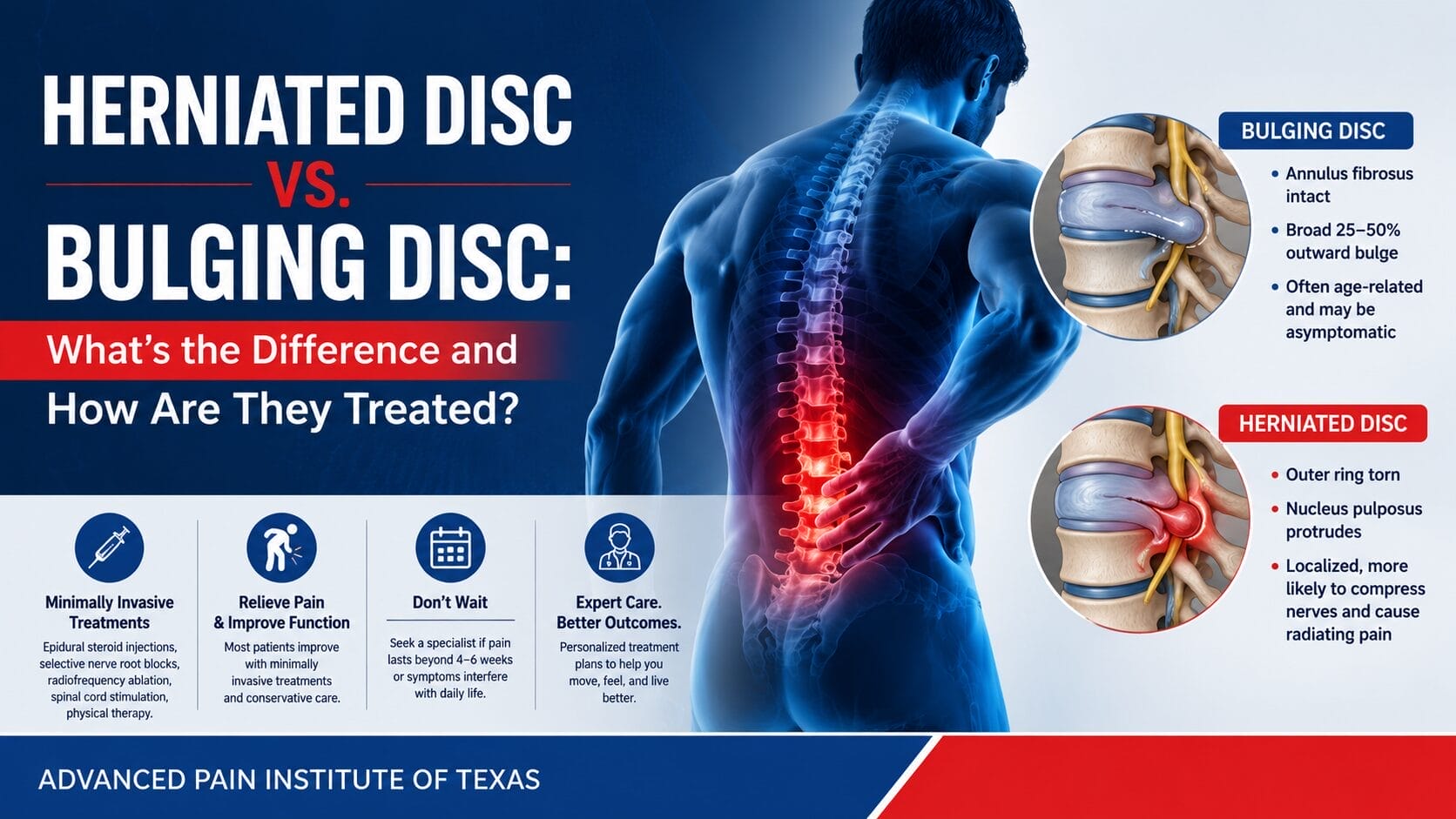
- Effective non-surgical options: Epidural Steroid Injections (ESIs), Selective Nerve Root Blocks, Radiofrequency Ablation (RFA), Spinal Cord Stimulation (SCS), and physical therapy.
- See a pain specialist if pain lasts more than 4 to 6 weeks, worsens, limits function, or causes numbness, weakness, or bowel and bladder changes.
- Advanced Pain Institute of Texas physicians are double board-certified with over 25 years combined experience serving patients across the DFW Metroplex.
What Is Sciatica?
Sciatica is one of the most common pain complaints we treat at Advanced Pain Institute of Texas. It occurs when the sciatic nerve — the longest nerve in your body, running from your lower back through your hips and down each leg — becomes compressed or irritated. The result is a distinctive shooting, burning, or tingling pain that radiates from the lower back into the buttock and down the leg.
If you’ve ever felt a jolt of pain shoot down your leg when sitting, standing, or bending, you may be experiencing sciatica. The good news? In most cases, sciatica can be effectively treated without surgery.
Common Causes of Sciatica
Sciatica isn’t a condition in itself — it’s a symptom of an underlying spinal problem compressing the sciatic nerve. The most common causes include:
- Herniated discs — When the soft inner material of a spinal disc pushes through the outer layer and presses on the nerve root
- Spinal stenosis — Narrowing of the spinal canal that puts pressure on the nerves
- Degenerative disc disease — Age-related wear and tear that causes discs to lose height and flexibility
- Spondylolisthesis — When one vertebra slips forward over another
- Piriformis syndrome — Tightness in the piriformis muscle that irritates the sciatic nerve
Symptoms: How to Recognize Sciatica
Sciatica symptoms can range from mild discomfort to debilitating pain. Key signs include:
- Sharp, shooting pain from the lower back into the leg (usually one side)
- Numbness or tingling in the leg or foot
- Muscle weakness in the affected leg
- Pain that worsens when sitting, coughing, or sneezing
- A burning or “electric shock” sensation along the nerve path
If you’re experiencing any of these symptoms, it’s important to get an accurate diagnosis. At Advanced Pain Institute, we use targeted diagnostic testing to identify exactly where the nerve compression is occurring — so we can treat the source, not just the symptoms.
Non-Surgical Sciatica Treatments
At Advanced Pain Institute of Texas, we specialize in minimally invasive, interventional pain procedures designed to provide effective, lasting relief without major surgery. Here are the most effective non-surgical options for sciatica:
Epidural Steroid Injections (ESIs)
Epidural steroid injections deliver powerful anti-inflammatory medication directly to the area surrounding the compressed nerve root. This reduces swelling and inflammation, often providing weeks to months of significant pain relief. ESIs are one of the most well-established interventional treatments for sciatica.
Selective Nerve Root Blocks
When we need to pinpoint exactly which nerve root is causing your sciatica, a selective nerve root block serves as both a diagnostic and therapeutic tool. A targeted injection of anesthetic and steroid is placed at a specific nerve root, providing relief while confirming the pain source.
Radiofrequency Ablation (RFA)
For patients whose sciatica stems from facet joint problems, radiofrequency ablation uses controlled heat to interrupt pain signals from the affected nerves. The results typically last 6 to 18 months, making it one of the longer-lasting non-surgical options.
Spinal Cord Stimulation (SCS)
For chronic sciatica that hasn’t responded to other treatments, spinal cord stimulation offers a proven, long-term solution. A small device sends mild electrical pulses to the spinal cord, interrupting pain signals before they reach the brain. Patients often report a 50–70% reduction in pain.
Physical Therapy & Targeted Exercise
Structured physical therapy strengthens the muscles supporting the spine, improves flexibility, and takes pressure off the sciatic nerve. We often recommend physical therapy alongside interventional procedures for the best outcomes.
When Should You See a Pain Management Specialist?
Don’t wait for sciatica to resolve on its own — especially if:
- Pain has lasted more than 4–6 weeks
- Over-the-counter medications aren’t providing relief
- You’re experiencing numbness, tingling, or weakness in your leg
- Pain is severe enough to affect your daily activities or sleep
- You have bowel or bladder changes (seek immediate medical attention)
Get Expert Sciatica Treatment in the DFW Metroplex
At Advanced Pain Institute of Texas, our physicians are double board-certified in interventional pain management with over 25 years of combined experience treating sciatica and other chronic pain conditions. We serve patients from Dallas, Denton, Carrollton, and communities across the DFW Metroplex.
Ready to find relief from sciatica pain? Call us at (972) 866-4246 or request a benefit verification online today.
Share this article
Related Posts


Follow us
A quick overview of the topics covered in this article.