Spooky Pain Myth: More Rest = Less Pain
Introduction: Debunking the “More Rest = Less Pain” Myth
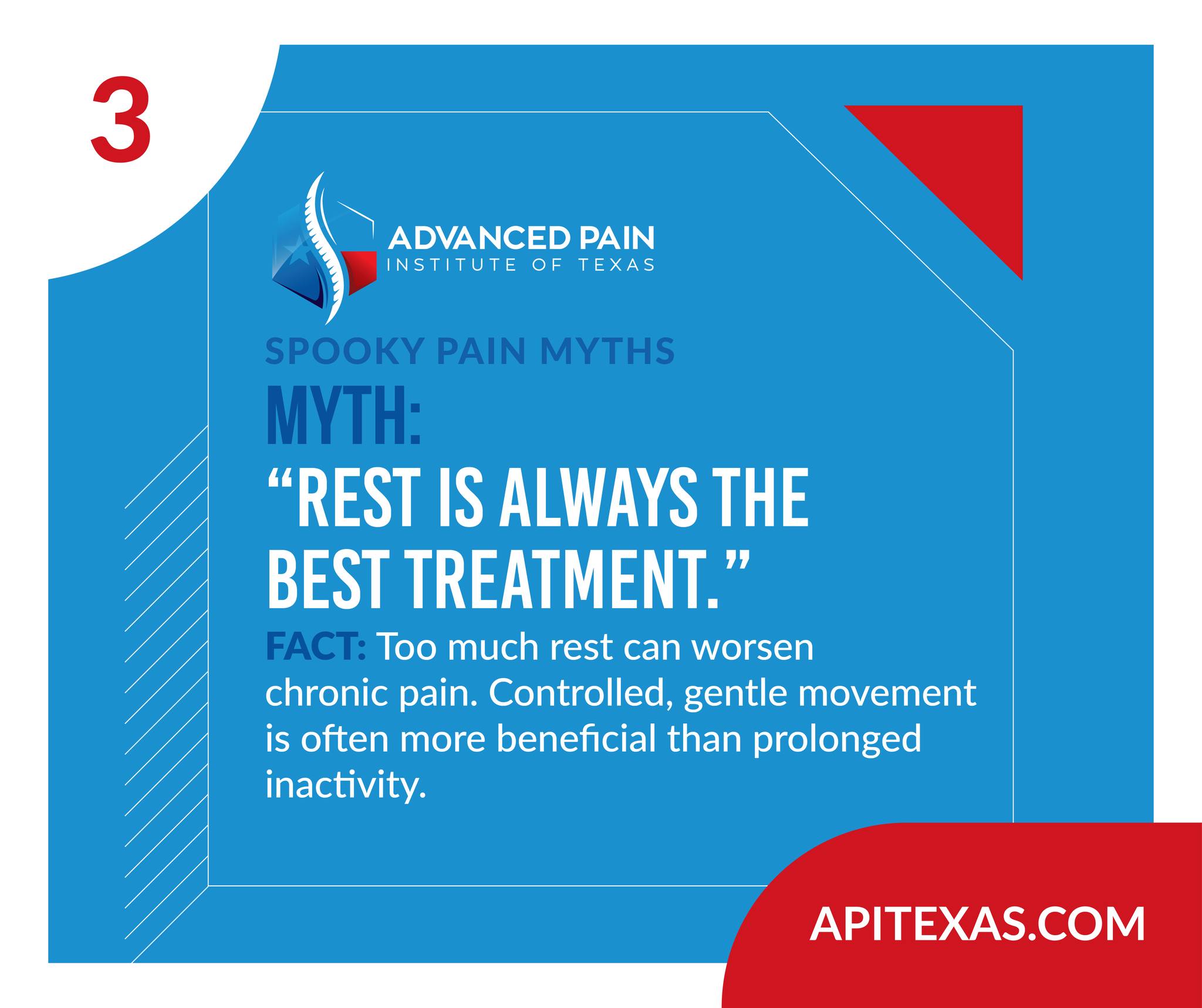
Let’s face it—when you’re in pain, your first instinct is to stop everything, lie down, and rest. It feels natural, right? That’s what most of us have been taught: if something hurts, you rest it. And yes, in some cases, especially after acute injuries or surgery, rest is absolutely crucial. But when it comes to chronic pain, this spooky myth can actually make things worse.
Imagine treating a sore joint like a haunted house—if you avoid it out of fear, the mystery (and misery) grows. You get weaker, stiffer, more anxious. Before long, your whole life shrinks around that pain. That’s not healing—that’s hiding. At Advanced Pain Institute of Texas, we believe in shining a flashlight on that haunted room. And often, that light comes in the form of gentle, guided movement.
This article will walk you through why too much rest can be harmful, how movement can be your secret weapon, and what steps you can take—right now—to start feeling better and reclaiming your life. Ready to bust this myth? Let’s go.
The Origins of the Pain-Rest Myth
The idea that rest cures pain has deep historical roots. For centuries, physicians believed that immobilizing an injury or area of pain gave the body time to “heal itself” undisturbed. And in the case of acute injuries, like a broken bone or torn ligament, this made perfect sense. Rest was essential.
But somewhere along the way, this advice got stretched too far—people began applying it to every kind of pain, especially chronic pain, where the rules are very different. Add to that our modern lifestyle (sedentary jobs, long hours of screen time, and the glamorization of “taking it easy”), and you’ve got a recipe for widespread inactivity.
The scary truth? This cultural habit of “just resting it” often leads chronic pain sufferers down a path of worsening discomfort, not relief. The longer we avoid movement, the more our muscles weaken, joints stiffen, and minds associate activity with fear and pain. It’s a vicious cycle, and it’s time to break it.
What Is Chronic Pain, Really?
Let’s clear something up: chronic pain is not just “pain that lasts a long time.” It’s a condition where the nervous system becomes overly sensitive, often after the original injury has healed. This means your brain can continue to send out pain signals even when there’s no active damage.
It’s like your body’s fire alarm system going haywire—ringing constantly, even though there’s no smoke or fire. This can happen in the back, joints, neck, or even as nerve pain (like sciatica or fibromyalgia).
Many people don’t realize that chronic pain becomes a condition in itself, not just a symptom. And here’s the kicker: traditional rest-based approaches don’t address this dysfunction. Instead, you need a plan that helps rewire your nervous system, reduce sensitivity, and rebuild trust in your body again.
The Role of the Brain in Pain Perception
Here’s something that might surprise you: pain doesn’t come from the body—it’s created by the brain. Your nerves send signals to the brain, and your brain decides whether or not to interpret them as pain.
When you’ve been in pain for a long time, your brain can start to misinterpret safe movements or sensations as threats. It’s like your nervous system is stuck in “alert” mode, constantly scanning for danger. This leads to pain that feels very real—even though the tissues might not be damaged at all.
By staying still and avoiding movement, we feed the fear. We train the brain to see movement as dangerous. On the flip side, introducing safe, gentle movement can help reprogram the brain to relax its grip on those pain signals. That’s the beauty of pain science—it empowers you to take back control.
Why Too Much Rest Can Backfire
It’s tempting to curl up under a blanket and wait for pain to pass. But here’s the twist: chronic rest can actually become part of the problem. Let’s break down why:
-
Muscle Deconditioning: Muscles are like rubber bands—the less you use them, the more they lose their flexibility and strength. This makes daily movements harder and more painful.
-
Joint Stiffness: Without regular motion, joints become less lubricated and more rigid. It’s like a door hinge that hasn’t been used—it starts to creak and resist movement.
-
Weight Gain: Lack of activity often leads to added pounds, which can increase pressure on your joints and worsen inflammation.
-
Mental Health Effects: Inactivity is linked to depression, anxiety, and a sense of helplessness. Chronic pain already plays tricks on your emotions, and rest can fuel that fire.
-
Fear of Movement (Kinesiophobia): The longer you avoid moving, the scarier it becomes. This fear alone can cause more pain than the original issue.
So while short-term rest might feel comforting, long-term rest can trap you in a cycle of worsening pain, weakness, and fear. That’s the spooky reality we’re here to avoid.
Movement as Medicine
Here’s the good news: movement isn’t the enemy—it’s actually your ally in the fight against chronic pain. Think of your body like an old garden hose. If it’s been coiled up and unused for months, it’s stiff and clogged. But turn on the water, start uncoiling it slowly, and it begins to function again. That’s what gentle movement does for your body.
Exercise doesn’t have to mean hitting the gym or running marathons. We’re talking about light, intentional movement designed to get your joints moving, your muscles active, and your blood flowing. This type of activity can:
-
Increase circulation, which brings oxygen and nutrients to damaged tissues and removes inflammation-causing waste.
-
Boost endorphins, your body’s natural painkillers. These chemicals elevate your mood and help reduce pain perception.
-
Promote better posture and alignment, which can relieve pressure from overworked muscles and joints.
-
Interrupt the pain cycle, by teaching your brain that movement isn’t dangerous.
It’s all about breaking that mental association between activity and pain. With guidance and consistency, your body begins to respond positively to movement, and your brain rewires its response to physical effort.
The Science Behind Movement Therapy
Science is catching up to what pain specialists have observed for years—movement works. Studies show that gentle physical activity can be just as effective, if not more so, than medications when it comes to long-term pain relief.
A key concept here is neuroplasticity—your brain’s ability to adapt and change. With the right kind of input (like safe movement), the nervous system learns new patterns and starts turning the volume down on pain signals.
Several scientific reviews have highlighted how exercise therapy helps patients with chronic low back pain, arthritis, and fibromyalgia. These programs often include:
-
Aerobic activity (like walking or water aerobics)
-
Stretching and mobility exercises
-
Strength training
-
Cognitive-behavioral strategies to help with fear of movement
The most powerful part? Movement therapy gives the patient back a sense of control. It’s not about just being passive and hoping a treatment works—it’s about actively participating in your recovery, and that mental shift alone is incredibly healing.
What Kind of Movement Is Safe for Chronic Pain?
You don’t need a fitness tracker or a gym membership to get started. In fact, the best kind of movement is often the simplest and most intuitive. The goal is to gently engage your body without overwhelming it.
Here are some low-impact options that can be adapted to nearly every pain condition:
-
Walking: One of the best full-body movements. Start with 5 minutes a day and build up.
-
Stretching: Loosens tight muscles and improves joint mobility. Great in the morning or before bed.
-
Swimming or Water Therapy: Water supports your weight, making movement easier and less painful.
-
Tai Chi or Yoga: Mindful movement practices that combine strength, balance, and breathwork.
-
Chair Exercises: Perfect for those with limited mobility or balance issues.
The key is to start slow, stay consistent, and celebrate progress, no matter how small. Even a few minutes a day can have a powerful cumulative effect over time.
Understanding Pain Flare-Ups
Let’s be real: when you start moving again, you might feel a little more pain at first. That’s not a sign you’re doing something wrong—it’s your body readjusting. Think of it like sore muscles after a new workout. Discomfort doesn’t mean damage.
The tricky part is learning to distinguish helpful pain from harmful pain. Here’s a quick guide:
| Type of Pain | Description | What to Do |
|---|---|---|
| Helpful Pain | Mild soreness, achy muscles, slight fatigue | Keep moving gently, rest if needed |
| Harmful Pain | Sharp, stabbing, sudden increase in symptoms | Stop and consult a provider |
| Fear-Based Pain | Anxiety about movement, avoidance behavior | Work with a therapist to overcome fear |
A good rule of thumb? If the pain eases within 24–48 hours, it’s likely just your body adapting. If it lingers or worsens, you may need to adjust your activity level.
How to Start Moving Again Without Making Things Worse
Feeling stuck is normal. You want to get better, but you’re scared of making things worse. That’s why a structured and personalized approach to movement is essential.
Start with these tips:
-
Set Mini Goals: “I’ll walk for 5 minutes after lunch” is more doable than “I need to get in shape.”
-
Track Progress: Use a journal or app to record how you feel after movement. This builds confidence and accountability.
-
Mix It Up: Variety keeps it fun and helps avoid overuse injuries.
-
Use Pacing: Break activities into smaller chunks with rest in between. You don’t have to do it all at once.
-
Celebrate Wins: Did you stretch three days this week? That’s progress worth celebrating.
The journey from chronic rest to gentle movement isn’t linear. There will be setbacks—but every step forward, no matter how small, is a win for your body and your brain.
The Role of Multidisciplinary Pain Treatment
Chronic pain is complex, which means it often needs a team approach. That’s where multidisciplinary care comes in—it combines the best of different fields to address pain from every angle.
A strong treatment plan might include:
-
Pain management physicians for targeted procedures
-
Physical therapists to guide safe movement
-
Psychologists or counselors to address fear, anxiety, and trauma related to pain
-
Nutritionists for anti-inflammatory diet plans
-
Occupational therapists to help you adapt everyday tasks
This approach doesn’t just treat the pain—it helps rebuild your life around movement, confidence, and function. You don’t have to figure it out alone. You just need the right team and tools.
Advanced Pain Institute of Texas: A Holistic Approach
At the Advanced Pain Institute of Texas, we don’t believe in one-size-fits-all solutions—especially when it comes to something as personal and complex as chronic pain. Our philosophy is simple: treat the whole person, not just the symptoms. And that starts by helping you safely return to the activities you love through a balance of targeted treatments, education, and compassionate care.
We take pride in creating individualized treatment plans that factor in your pain history, current health, goals, and fears. Whether you’re dealing with lower back pain, neuropathy, arthritis, or post-surgical discomfort, our team works to uncover the root cause of your pain—not just mask it.
Our approach includes:
-
Advanced diagnostics to understand your unique pain patterns
-
Guided movement strategies tailored to your condition
-
Psychological support, because chronic pain is just as emotional as it is physical
-
Regular follow-ups and reassessments, so your treatment evolves with you
We believe every patient has the right to a life that feels bigger than their pain—and we’re here to help you get there, one step (or stretch!) at a time.
Targeted Procedures That Support Active Recovery
Sometimes, the body needs a little help to jumpstart the healing process. That’s where targeted interventional procedures come in. These are not quick fixes or band-aid solutions—but they can reduce pain enough to allow you to begin moving again, which is the ultimate goal.
Here are some of the procedures we may recommend:
-
Nerve Blocks: These involve injecting medication around a specific nerve or group of nerves to “block” pain signals.
-
Epidural Steroid Injections: Often used for spinal pain, these reduce inflammation and give relief where pain is radiating from the spine.
-
Radiofrequency Ablation (RFA): This technique uses heat to disrupt nerves transmitting pain signals, providing longer-term relief.
-
Trigger Point Injections: Used for muscle pain caused by tight knots (trigger points), allowing muscles to relax and function better.
-
Spinal Cord Stimulation: A more advanced therapy where a small device is implanted to modulate pain signals before they reach the brain.
These procedures can be game-changers—not because they “cure” chronic pain, but because they give you breathing room to start moving, rebuilding strength, and restoring confidence.
Customized Recommendations for Every Patient
No two bodies are the same—and neither are their pain journeys. That’s why at the Advanced Pain Institute of Texas, we put personalization at the heart of everything we do.
You won’t be handed a generic plan or told to just “rest and wait it out.” Instead, you’ll work with a care team that listens to your story, understands your lifestyle, and builds a plan that works for you. That plan might include:
-
Tailored physical therapy regimens matched to your abilities and goals
-
Nutritional guidance to reduce inflammation
-
Pain psychology referrals to help shift mindset and overcome movement fear
-
Educational resources to empower you with knowledge about your condition
-
Progress tracking and coaching to adjust the plan as you improve
This ongoing collaboration ensures that your plan doesn’t just help you cope with pain, but actively helps you overcome it—by making your body and brain partners in healing.
Conclusion: Why a Little Movement Goes a Long Way
Let’s wrap this up with some truth: rest has its place—but it’s not the answer to chronic pain. In fact, too much rest can turn a temporary issue into a lasting condition, creating a vicious cycle of stiffness, fear, and worsening discomfort.
The real magic happens when you start moving—safely, gently, and consistently. Movement is your body’s way of saying, “I’m still here, I still work, and I still want to feel good.” You don’t need to be pain-free to start—you just need to start. And with the right support, like what we offer at the Advanced Pain Institute of Texas, you’ll find that movement doesn’t just reduce pain—it brings your life back into focus.
Don’t let this spooky pain myth haunt your future. Step into healing with purpose, one movement at a time. We’ll be right here to help you every step of the way.
FAQs
1. Is it safe to exercise with chronic pain?
Yes, but it depends on the type and severity of your condition. Low-impact, guided exercises can help improve mobility and reduce pain over time. Always consult with a pain specialist or physical therapist before starting a routine.
2. How do I know if I’m overdoing it?
If your pain worsens significantly and doesn’t subside within 24–48 hours, you might be pushing too hard. Gentle soreness is normal, but sharp or sudden pain is a red flag. Learn to pace yourself and increase activity gradually.
3. What’s the best type of movement for lower back pain?
Walking, water therapy, core-strengthening exercises, and gentle stretches are typically beneficial. Avoid high-impact or twisting movements unless approved by a medical provider.
4. Can chronic pain ever fully go away?
While not everyone experiences complete relief, many people see significant improvements with the right combination of therapies, mindset changes, and support. Some regain full function and live pain-free lives.
5. How soon can I expect results with a pain treatment plan?
It varies by person. Some feel better within weeks, while others take months. The key is consistency, open communication with your care team, and realistic expectations.
Share this article
Related Posts





Follow us
A quick overview of the topics covered in this article.
- Introduction: Debunking the “More Rest = Less Pain” Myth
- The Origins of the Pain-Rest Myth
- What Is Chronic Pain, Really?
- The Role of the Brain in Pain Perception
- Why Too Much Rest Can Backfire
- Movement as Medicine
- The Science Behind Movement Therapy
- What Kind of Movement Is Safe for Chronic Pain?
- Understanding Pain Flare-Ups
- How to Start Moving Again Without Making Things Worse
- The Role of Multidisciplinary Pain Treatment
- Advanced Pain Institute of Texas: A Holistic Approach
- Targeted Procedures That Support Active Recovery
- Customized Recommendations for Every Patient
- Conclusion: Why a Little Movement Goes a Long Way
- FAQs