Understanding Spinal Stenosis: Symptoms, Causes, and Minimally Invasive Treatment in McKinney, TX
- Spinal stenosis narrows the spinal canal, causing pain, numbness, weakness, and neurogenic claudication relieved by leaning forward.
- Most cases result from degenerative changes, plus herniated discs, bone spurs, or thickened ligaments compressing nerves.
- Diagnosis uses detailed history, physical exam, and MRI to pinpoint canal narrowing and nerve compression.
- McKinney patients benefit from minimally invasive options like epidural steroid injections, MILD®, nerve blocks, radiofrequency ablation, and spinal cord stimulation.
- Seek specialist care at Advanced Pain Institute of Texas if walking worsens, weakness or numbness progress, or bladder/bowel changes occur, early treatment improves outcomes.
If you’ve noticed that your back or legs ache more after standing for a while, that walking even short distances has become increasingly uncomfortable, or that leaning forward over a shopping cart brings unexpected relief, you may be experiencing spinal stenosis — one of the most common spinal conditions affecting adults over 50. For residents of McKinney, Texas, understanding this condition is the first step toward finding effective, non-surgical relief.
At Advanced Pain Institute of Texas, our board-certified pain management specialists see patients from McKinney and communities throughout the DFW metroplex who are dealing with spinal stenosis. The good news? Modern minimally invasive treatments can significantly reduce pain, restore mobility, and improve quality of life — without major surgery.
What Is Spinal Stenosis?
Spinal stenosis occurs when the spaces within your spine narrow, putting pressure on the nerves that travel through the spinal canal. Think of your spinal canal as a protective tunnel that houses your spinal cord and nerve roots. When that tunnel narrows — due to aging, degenerative changes, or other factors — the compressed nerves can cause pain, numbness, weakness, and difficulty walking.
There are two main types of spinal stenosis:
Lumbar Spinal Stenosis (Lower Back)
This is the most common form, affecting the lower spine. Lumbar stenosis typically causes pain, cramping, or weakness in the legs and buttocks, especially when standing or walking. Many patients describe a “heavy” or “tired” feeling in their legs that improves when they sit down or lean forward. This classic pattern — called neurogenic claudication — is one of the hallmark signs of lumbar spinal stenosis.
Cervical Spinal Stenosis (Neck)
Cervical stenosis occurs in the neck region and can cause more serious symptoms because it may compress the spinal cord itself. Symptoms can include neck pain, numbness or tingling in the hands and arms, balance difficulties, and in severe cases, problems with coordination or bladder control. If you’re experiencing any of these symptoms, it’s important to seek evaluation promptly.
Recognizing the Symptoms of Spinal Stenosis
Spinal stenosis develops gradually, and many people live with early symptoms for months or years before seeking treatment. Knowing what to look for can help you get evaluated sooner — when treatment is typically most effective. Common symptoms include:
- Leg pain or cramping that worsens with standing or walking and improves when you sit, lean forward, or lie down
- Lower back pain that radiates into the buttocks or thighs
- Numbness or tingling in the legs, feet, hands, or arms
- Muscle weakness in the legs or feet, which may cause unsteadiness or difficulty climbing stairs
- The “shopping cart sign” — finding relief when leaning forward, such as over a shopping cart or walker, because flexion opens up the spinal canal slightly
- Reduced walking distance — needing to sit and rest more frequently during walks
- Balance problems — particularly with cervical stenosis
If any of these symptoms sound familiar, you’re not alone. Spinal stenosis affects an estimated 250,000 to 500,000 Americans, and its prevalence increases significantly after age 50. In McKinney’s rapidly growing community — where active lifestyles, outdoor recreation at places like Bonnie Wenk Park and Erwin Park, and neighborhood walks are part of daily life — these symptoms can be especially frustrating.
What Causes Spinal Stenosis?
Understanding the root cause of your spinal stenosis helps your pain management specialist select the most effective treatment approach. The most common causes include:
Degenerative Changes (Most Common)
The natural wear and tear of aging is the leading cause of spinal stenosis. Over decades, the discs between your vertebrae lose hydration and height, bone spurs (osteophytes) develop along the vertebral edges, and the ligaments that support your spine can thicken. All of these changes gradually narrow the spinal canal. This is particularly common in people over 60, though it can begin earlier in those with physically demanding occupations or previous spine injuries.
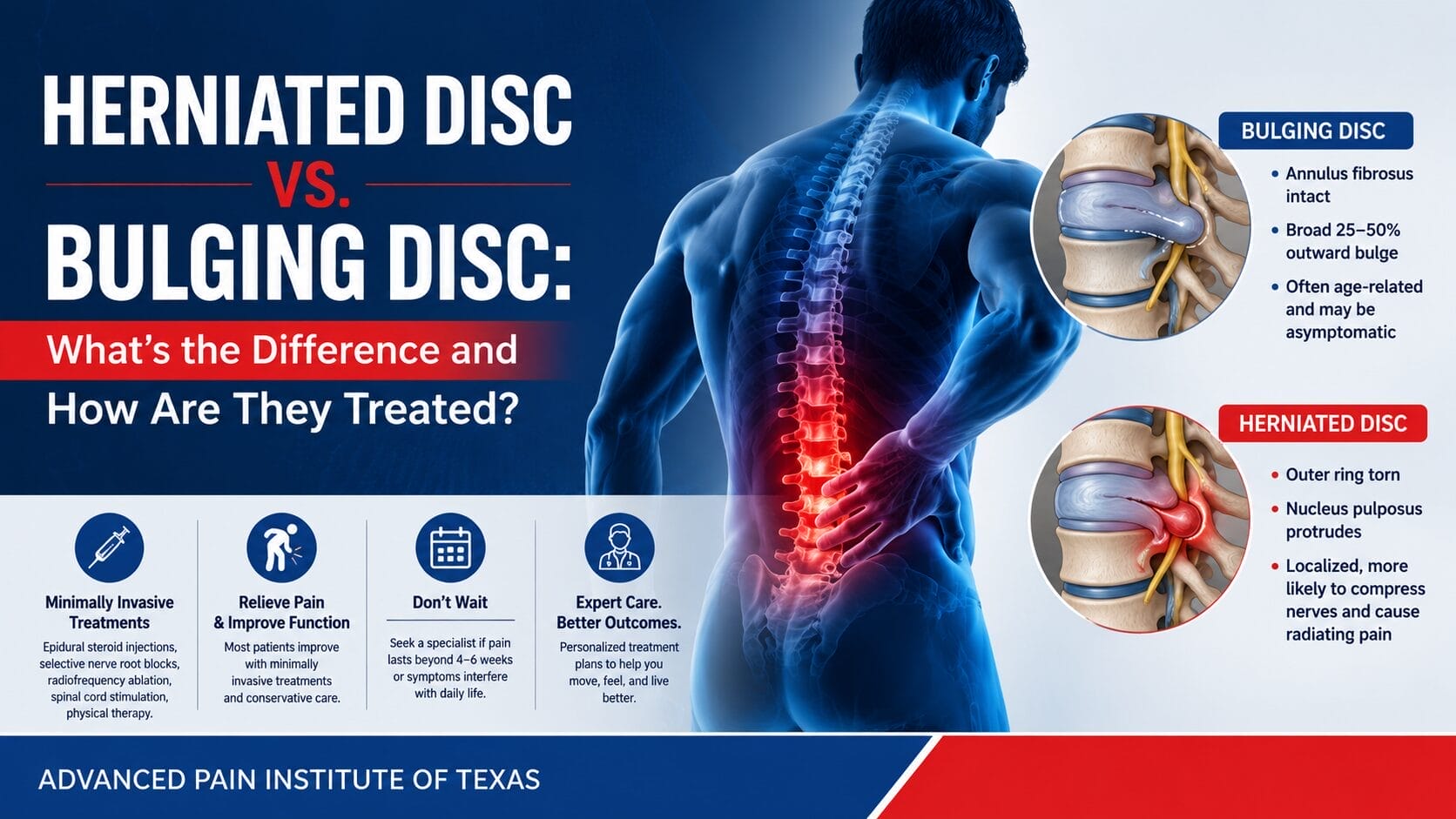
Herniated or Bulging Discs
When a spinal disc bulges or herniates, the displaced material can protrude into the spinal canal, narrowing the space available for nerves. If you’ve read our previous article on herniated disc vs. bulging disc differences, you know these conditions can cause nerve compression on their own — and when combined with other stenotic changes, the effects can be compounded.
Bone Spurs
Osteoarthritis and general spinal degeneration can trigger the formation of bone spurs — small, bony projections that grow along the edges of vertebrae. These spurs can extend into the spinal canal and press against nerve roots, causing pain and other neurological symptoms.
Thickened Ligaments
The ligamentum flavum — a thick ligament that runs along the back of the spinal canal — can become thicker and stiffer with age. When it thickens, it takes up more space inside the canal and can directly compress the spinal cord or nerve roots.
Other Contributing Factors
- Previous spine injuries — Fractures, dislocations, or surgical complications can cause structural changes that narrow the spinal canal
- Congenital stenosis — Some people are born with a naturally narrower spinal canal, making them more susceptible to symptomatic stenosis as age-related changes occur
- Spondylolisthesis — When one vertebra slips forward over the one below it, narrowing the canal
- Tumors or cysts — Rare but possible causes of spinal canal narrowing
How Is Spinal Stenosis Diagnosed?
If you visit Advanced Pain Institute of Texas with symptoms suggestive of spinal stenosis, your evaluation will typically include:
- Detailed medical history — Your specialist will ask about the nature, location, and timing of your symptoms, what makes them better or worse, and how they affect your daily activities
- Physical examination — Testing your reflexes, muscle strength, sensation, and walking pattern to identify neurological deficits
- Advanced imaging — MRI is the gold standard for visualizing spinal stenosis, showing exactly where and how severely the canal is narrowed. CT scans or X-rays may also be used to evaluate bone structure and alignment
An accurate diagnosis is essential because several other conditions — including sciatica, peripheral vascular disease, and hip arthritis — can cause similar symptoms. Getting the right diagnosis means getting the right treatment.
Minimally Invasive Treatment Options for Spinal Stenosis
At Advanced Pain Institute of Texas, we specialize in non-surgical and minimally invasive approaches to spinal stenosis. For many patients, these treatments provide meaningful pain relief and improved function without the risks, recovery time, and uncertainty of open spine surgery.
Epidural Steroid Injections
Epidural steroid injections deliver powerful anti-inflammatory medication directly to the area of nerve compression. Using fluoroscopic (X-ray) guidance for precision, your specialist places a thin needle near the affected nerve roots and injects a combination of corticosteroid and local anesthetic. This can reduce inflammation and swelling around the compressed nerves, providing weeks to months of pain relief. Many McKinney patients use this treatment to break the pain cycle and participate more actively in physical rehabilitation.
Nerve Block Procedures
Selective nerve root blocks can be both diagnostic and therapeutic. By numbing a specific nerve that’s being compressed by stenosis, your specialist can confirm which nerve is causing your symptoms and provide targeted pain relief. This information is invaluable for guiding further treatment decisions.
Minimally Invasive Lumbar Decompression (MILD®)
For patients with moderate to severe lumbar stenosis who haven’t responded adequately to injections, the MILD procedure offers a breakthrough option. This outpatient procedure uses a tiny incision (about the size of a baby aspirin) to remove small pieces of thickened ligament and bone that are crowding the spinal canal. The MILD procedure restores space in the canal without implants, general anesthesia, or stitches — and most patients go home the same day with meaningful improvement in their walking ability.
Spinal Cord Stimulation
For patients with persistent pain from spinal stenosis that hasn’t responded to other treatments, spinal cord stimulation may be an option. This technology uses mild electrical impulses to interrupt pain signals before they reach your brain. A small device implanted near the spine delivers targeted stimulation that can significantly reduce pain and improve mobility.
Radiofrequency Ablation
When facet joint arthritis is contributing to spinal stenosis symptoms, radiofrequency ablation can provide longer-lasting relief. This procedure uses heat energy to disrupt the tiny nerves that transmit pain signals from arthritic facet joints, often providing six months to a year or more of relief.
Living with Spinal Stenosis: Practical Strategies for McKinney Residents
While medical treatment addresses the underlying nerve compression, lifestyle adjustments can help you manage symptoms day to day and complement your treatment plan:
Stay Active — The Right Way
Exercise is one of the most important things you can do for spinal stenosis. Focus on activities that keep your spine in a slightly flexed (forward-leaning) position, which naturally opens the spinal canal. Cycling, swimming, and walking with Nordic poles are excellent choices. McKinney’s extensive trail system — including the Erwin Park trails, the Cotton Belt Trail, and paths through Towne Lake Recreation Area — provides beautiful settings for gentle walking and cycling.
Core Strengthening
Strong abdominal and back muscles provide better support for your spine, reducing the load on your stenotic segments. Gentle core exercises, yoga, and Pilates — performed under guidance — can make a meaningful difference in symptom management over time.
Posture and Ergonomics
If you work at a desk in McKinney’s growing business district along US-75 or in one of the many corporate offices in Craig Ranch, pay attention to your workstation setup. An ergonomic chair, properly positioned monitor, and regular standing breaks can reduce spinal stress throughout the day.
Weight Management
Excess body weight increases the load on your spine and accelerates degenerative changes. Even modest weight loss of 10–15 pounds can noticeably reduce spinal stress and improve stenosis symptoms.
Heat and Cold Therapy
Applying heat before activity can loosen stiff muscles and joints, while ice after activity can reduce inflammation. Many patients find alternating between the two provides the best relief.
When to Seek Specialist Care for Spinal Stenosis
While mild spinal stenosis symptoms can sometimes be managed with exercise and lifestyle changes alone, you should consult a pain management specialist if:
- Your walking distance has decreased significantly
- Leg weakness is affecting your balance or ability to climb stairs
- Numbness or tingling is persistent or worsening
- Pain is interfering with sleep, work, or daily activities
- Over-the-counter medications are no longer providing adequate relief
- You’re experiencing any changes in bladder or bowel control (seek immediate evaluation)
Early intervention matters. The sooner spinal stenosis is properly diagnosed and treated, the better the outcomes tend to be. Waiting too long can allow nerve damage to progress, making treatment more complex and recovery slower.
Find Expert Spinal Stenosis Care in McKinney, TX
Spinal stenosis doesn’t have to control your life. With modern minimally invasive treatments and a personalized approach to pain management, many patients experience significant improvement in their pain, mobility, and overall quality of life.
If you’re in McKinney, Prosper, Allen, Frisco, or anywhere in the DFW metroplex and you suspect spinal stenosis may be behind your back or leg pain, the board-certified specialists at Advanced Pain Institute of Texas are ready to help you get answers.
Request an appointment today to schedule your evaluation and take the first step toward reclaiming your mobility and comfort.
Share this article
Related Posts




Follow us
A quick overview of the topics covered in this article.