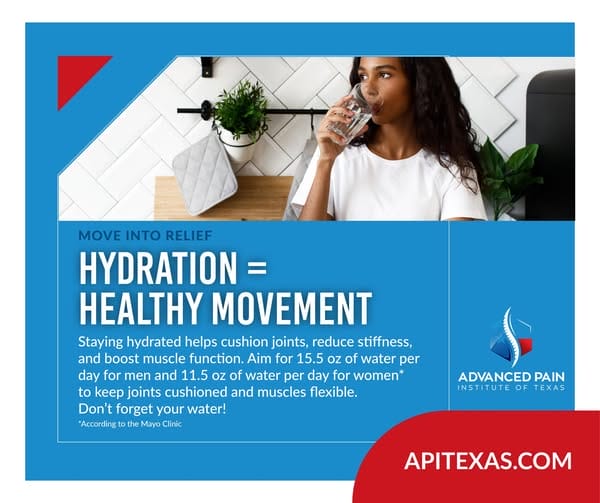
Did You Know Dehydration Can Make Pain Worse?
- Dehydration amplifies pain: 1–2% body water loss increases sensitivity, causing headaches, muscle cramps, and worse joint pain.
- Water lubricates joints and spinal discs; low hydration dries synovial fluid, increasing friction, degeneration, and back pain.
- Muscles are about 75% water; dehydration causes stiffness, spasms, slower recovery, impaired nutrient transport, and higher injury risk.
- Simple habits: carry a water bottle, aim for half your weight in ounces, eat water-rich foods to reduce inflammation; consult API Texas if needed.
Introduction
Think hydration is only about quenching your thirst? Think again. That water bottle sitting on your desk or tucked into your gym bag could be doing far more than keeping your mouth from getting dry—it could actually be playing a major role in how much pain you feel throughout the day. From achy joints to muscle cramps to pounding headaches, dehydration can quietly amplify discomfort in ways most people never realize. September may be cooling down, but that doesn’t mean your hydration habits should. Staying on top of your water intake could be one of the simplest, most powerful steps toward reducing daily pain and feeling better overall.
Let’s face it—pain is exhausting. And if you’re dealing with it regularly, you’re probably already juggling heating pads, meds, and maybe even therapy appointments. But here’s a surprising twist: something as simple as water can be a game-changer. Intrigued? You should be. Let’s dive into how a lack of hydration might be making your discomfort worse—and what you can do about it.
Understanding Dehydration
Dehydration happens when your body loses more fluids than it takes in, leaving your system running on empty. It’s more than just feeling a little thirsty—true dehydration can mess with everything from your mood to your muscles. While it’s easy to assume dehydration only happens during a hot summer day or after a heavy workout, it can sneak up on you in everyday life.
Did you know that even mild dehydration—just 1–2% loss of body water—can start affecting your body’s ability to function properly? That’s barely a cup or two of fluid! The risks increase if you’re busy, older, on medications like diuretics, or dealing with illnesses that cause vomiting or diarrhea. People who consume a lot of caffeine or alcohol can also be more prone to dehydration without even realizing it.
What’s more, the symptoms of dehydration are often mistaken for something else: fatigue, dizziness, dry skin, brain fog, and—you guessed it—body aches and pains. Your body needs water for nearly every function, and when it’s not getting enough, it starts sending out distress signals. Unfortunately, we’re not always great at recognizing them.
How Dehydration Impacts the Body
Water keeps your body running smoothly, like oil in an engine. Take it away, and things start grinding. One of the first systems to take a hit when you’re dehydrated is your musculoskeletal system—your joints, muscles, ligaments, and bones. Without enough water, muscles can become stiff, joints lose their lubrication, and pain receptors become more sensitive.
Dehydration also thickens your blood, making circulation sluggish. This reduces the flow of oxygen and nutrients to your tissues, which can increase inflammation and prolong recovery. Plus, a dehydrated nervous system tends to misfire, making you more reactive to pain stimuli—even minor ones.
Let’s not forget the brain: dehydration shrinks brain tissue slightly, which can intensify headaches, affect mood, and reduce your ability to cope with pain. So not only does dehydration make pain worse physically—it also makes it harder to handle emotionally.
Why Pain Feels Worse When You’re Dehydrated
Ever notice how a minor ache feels like a full-blown crisis when you’re tired or stressed? Dehydration has a similar amplifying effect on pain. Here’s why: when your body is low on fluids, it begins to conserve water by limiting blood flow to non-essential areas. That means your muscles, joints, and skin don’t get the hydration they need—leading to stiffness, cramping, and heightened pain sensitivity.
Water helps flush out toxins and metabolic waste from your body. When you’re dehydrated, these waste products linger longer in your system, contributing to inflammation and discomfort. It’s like trying to clean a dirty sponge with no water—impossible and messy. The buildup of these irritants creates an environment in your body where pain thrives.
Chronic conditions like arthritis, fibromyalgia, or migraines can become significantly more intense when hydration is low. That’s because water plays a crucial role in regulating temperature, lubricating tissues, and reducing friction in joints. When that lubrication is missing, bones and tissues grind against each other more harshly, inflaming nerves and intensifying pain.
It’s not just about existing pain either—dehydration lowers your pain threshold. That means the same activity that wouldn’t normally bother you (like walking up stairs or stretching after waking up) can feel more painful if you’re dehydrated. Think of it like turning up the volume on your pain dial without even realizing it.
The Role of Water in Joint Health
Your joints are surrounded by a slippery substance called synovial fluid, which acts as a shock absorber. Guess what the main ingredient of that fluid is? Yep—water. Without adequate hydration, that cushioning fluid begins to dry out, and what used to feel smooth and effortless—like bending your knees or stretching your fingers—can start to feel creaky, tight, or downright painful.
Cartilage, the tough yet flexible tissue that covers the ends of bones in joints, is also made up of a high percentage of water. When you’re hydrated, cartilage stays spongy and resilient, allowing for pain-free movement. When you’re dehydrated? That same cartilage becomes brittle and more prone to damage.
This is especially important for people with osteoarthritis or other degenerative joint conditions. Dehydration can accelerate joint wear and tear and make symptoms flare more frequently. You might feel a grinding sensation or hear cracking sounds when moving—signals that your joints aren’t getting the moisture they need to move easily.
In addition, inflammation in joints can become worse with dehydration. Inadequate hydration makes it harder for your body to remove inflammatory byproducts. These byproducts can linger in your joints, irritating the surrounding tissues and worsening your pain.
So the next time your knees feel like they’re made of sandpaper, ask yourself: have I had enough water today?
Water and Muscle Function
Muscles are about 75% water. That’s no coincidence—hydration is critical for healthy muscle function. Whether you’re walking, lifting, or simply sitting at your desk, your muscles need adequate fluid to contract and relax properly.
When you’re dehydrated, muscles lose their elasticity. They become tight, prone to spasms, and more susceptible to injury. Muscle cramps are one of the earliest signs that your hydration levels are off. These painful, involuntary contractions often happen during or after exercise, especially in hot weather, and are your body’s desperate way of saying, “I need water!”
Even if you’re not an athlete, staying hydrated helps your muscles recover from daily activities. Water helps transport nutrients like magnesium and potassium to muscle tissues. These minerals help prevent cramping and fatigue. Without them, you might find your muscles tire faster or feel sore for longer after simple movements.
If you suffer from chronic muscular pain—like in your back, neck, or shoulders—it’s worth considering whether dehydration could be playing a role. Staying well-hydrated may not be a magic cure, but it can certainly reduce the frequency and intensity of muscle-related discomfort.
Bottom line: happy muscles are hydrated muscles.
Hydration and Back Pain
Back pain is one of the most common complaints among adults—and believe it or not, your spinal discs are extremely dependent on water. Between each of your vertebrae is a disc that acts as a cushion, absorbing impact and allowing flexibility. These discs are filled with a gel-like material, and water is its key ingredient.
When you’re dehydrated, spinal discs begin to shrink and lose their ability to act as shock absorbers. This can lead to increased pressure on the vertebrae, pinched nerves, and reduced spinal mobility. The result? You feel more stiffness, tension, and pain—especially in your lower back, which bears the brunt of most daily movements.
Dehydration also affects the surrounding muscles that support the spine. Tight, under-hydrated muscles can pull your spine out of alignment, causing spasms or referred pain. You might not immediately connect your water intake with that sharp backache, but it’s often a silent contributor.
And here’s the kicker—many people with back pain reach for over-the-counter medications before they ever think about drinking more water. A simple glass of water might not replace your treatment plan, but it’s a low-cost, no-side-effect step that could make a real difference.
Hydration and Headaches
Ever get that dull, pounding headache in the middle of a long day and wonder where it came from? Before you chalk it up to stress, consider this: dehydration is a leading cause of headaches. When your body is low on fluids, your brain can temporarily contract or shrink from fluid loss, pulling away from the skull and triggering pain.
Dehydration headaches tend to feel like dull pressure across the forehead or at the back of the head. They can come on gradually or hit suddenly, and they’re often made worse by movement, light, or noise—very similar to a migraine.
If you already suffer from tension headaches or migraines, dehydration can trigger or intensify them. In fact, research shows that people who increase their water intake often report fewer and less severe headache episodes.
You don’t need to chug a gallon of water to notice a difference either. Drinking just 1–2 glasses of water when you feel a headache coming on may help reduce the pain or even stop it in its tracks. If you wake up with headaches, try drinking a glass of water first thing in the morning—your body becomes mildly dehydrated overnight.
Next time your head starts pounding, reach for your water bottle before your medicine cabinet. Your brain will thank you.
Hydration and Inflammation
Inflammation is at the root of most pain-related conditions—arthritis, migraines, back pain, and even autoimmune disorders. But did you know that dehydration can actually fuel the fire of inflammation in your body?
When you’re dehydrated, your body produces higher levels of histamines—chemicals that trigger inflammation in an effort to preserve the remaining water. This might be helpful in an emergency survival scenario, but in daily life, it spells trouble. That increased inflammation leads to swelling, stiffness, and—you guessed it—more pain.
Water helps flush out toxins, regulate temperature, and transport nutrients. Without enough water, your body can’t efficiently remove waste and inflammatory byproducts. These substances then accumulate in joints and muscles, irritating tissues and worsening the inflammatory response.
Another key point: blood becomes thicker and more viscous when you’re dehydrated, making it harder for your circulatory system to deliver oxygen and nutrients to tissues. Poor circulation delays healing, which prolongs inflammation and pain after even minor injuries.
If you’re dealing with a chronic inflammatory condition like rheumatoid arthritis, lupus, or irritable bowel syndrome, maintaining optimal hydration could help reduce flare-ups and make symptoms more manageable. Water may not be a cure, but it’s one of the cheapest and most effective anti-inflammatory tools in your arsenal.
So the next time your joints feel inflamed or you wake up puffy and stiff, check your hydration. Your body’s inflammation thermostat might be out of whack—and water could help cool it down.
Daily Water Needs: Are You Getting Enough?
Let’s bust a myth right away: the idea that everyone needs exactly 8 glasses of water a day is outdated. The truth is, how much water your body needs depends on a variety of factors—your age, activity level, weight, climate, and even the foods you eat.
A good general rule is this: aim to drink half your body weight in ounces of water each day. So if you weigh 160 pounds, try to drink about 80 ounces of water daily. If you’re sweating a lot, exercising, or in a hot environment, you’ll need even more.
Also, keep in mind that your body gets hydration from more than just water. Herbal teas, milk, and even water-rich foods like cucumbers, lettuce, watermelon, and oranges contribute to your daily fluid intake. That said, sugary drinks like soda and high-caffeine beverages don’t hydrate as effectively and can even contribute to dehydration.
Pay attention to your body’s cues. Are you feeling tired, foggy, or unusually hungry? Sometimes dehydration disguises itself as hunger or fatigue. The color of your urine is also a helpful indicator—aim for pale yellow. Dark yellow or amber usually means you’re not drinking enough.
Bottom line: don’t wait until you’re thirsty to drink water. Thirst is a late-stage signal. Staying ahead of dehydration helps you maintain energy, reduce pain, and function at your best.
Smart Tips to Stay Hydrated All Day
Let’s be honest: remembering to drink water throughout the day can be a struggle. Life gets busy, and sometimes water just doesn’t feel like a priority. But the good news is, a few simple strategies can make it almost effortless.
Here are some practical tips to help you stay hydrated:
-
Start your morning with water. Before your coffee or breakfast, drink a full glass of water to kickstart your system.
-
Carry a refillable water bottle. Make it your best friend. Stainless steel or insulated bottles keep your water cool and refreshing.
-
Flavor it up. Add lemon, cucumber, mint, or berries to your water to make it more enjoyable.
-
Set hydration reminders. Use phone alarms or hydration apps to nudge you every hour or two.
-
Link it to routines. Drink a glass of water before every meal, after every bathroom break, or every time you check your email.
-
Eat hydrating foods. Snack on fruits and veggies like watermelon, celery, strawberries, and tomatoes.
-
Track your intake. Journaling or using a hydration tracker can help keep you accountable and motivated.
Small steps add up. Making hydration a habit doesn’t require a complete lifestyle overhaul—it just takes a few mindful tweaks to your daily rhythm.
Why You Should Always Carry a Water Bottle
Think of your water bottle as your wellness sidekick. It’s not just about sipping every now and then—it’s about creating a consistent habit that supports your body all day long.
Having water within arm’s reach makes it far more likely that you’ll stay hydrated. When it’s out of sight, it’s out of mind. But when it’s right there on your desk, in your bag, or in your car’s cupholder, it becomes second nature to drink more often.
There are also mental and emotional benefits to carrying water. It’s a small act of self-care—a reminder that you’re looking out for your health. Plus, drinking more water throughout the day can help improve focus, reduce mood swings, and give you more energy to get through your to-do list.
Let’s not forget the financial side—carrying your own bottle means you’re less likely to spend money on overpriced, sugary drinks. It’s a win-win for your wallet and your wellness.
Choose a bottle that fits your lifestyle. If you’re always on the move, go for lightweight and leak-proof. If you’re at a desk all day, a large bottle with time markers can help you track your progress. It might seem like a small thing—but that little bottle could be the key to feeling less pain and more power.
Is Dehydration Making Your Pain Worse?
Not sure if dehydration is playing a role in your discomfort? There are some clear warning signs your body might be running low on fluids—and ramping up the pain as a result:
-
Frequent headaches or migraines
-
Muscle cramps or spasms
-
Stiff, achy joints
-
Fatigue or low energy
-
Dry mouth or dry skin
-
Dark yellow urine
-
Feeling dizzy or lightheaded
If these symptoms show up regularly, especially alongside pain, it’s worth experimenting with increasing your water intake. Keep a simple journal: track how much water you drink each day and rate your pain levels. You might start to notice patterns—and relief—within just a few days.
Hydration isn’t a cure-all, but it’s a powerful first step. It’s non-invasive, easy to implement, and can drastically improve how you feel, move, and recover.
When to Seek Professional Help
Of course, there are times when hydration alone won’t cut it. If you’ve increased your water intake and your pain is still persistent, severe, or interfering with your quality of life, it’s time to consult a professional.
Persistent joint pain, back issues, chronic headaches, or muscle stiffness could be symptoms of something deeper—like nerve compression, inflammation, or an underlying medical condition. Professionals can help pinpoint the root cause and recommend treatment options that go beyond hydration alone.
That’s where places like API Texas come in. Their team specializes in pain management and physical wellness, offering personalized evaluations and advanced treatment options tailored to your needs.
There’s no reason to suffer in silence—or to keep guessing at the cause of your discomfort. Hydration might be the first step, but expert care could be the key to lasting relief.
Why You Should Book a Check-Up Today
If you’ve ever found yourself thinking, “It’s probably nothing…” while ignoring that nagging back pain or stiff neck, you’re not alone. But here’s the truth: pain is never just pain. It’s your body’s way of waving a red flag, telling you something isn’t quite right. And while drinking more water might ease some of the symptoms, it won’t address deeper structural or muscular issues.
That’s why a check-up with professionals—like the team at API Texas—can be a game-changer. They understand how hydration fits into the bigger picture of pain management, but they also dig deeper. From muscle imbalances and joint degeneration to nerve-related pain, they look at why you’re hurting and help you find a path forward that’s based on your unique needs.
Maybe your muscles are constantly tight, your joints ache in the morning, or you can’t get through the day without reaching for pain relievers. Don’t wait for things to get worse. Prevention is always easier (and cheaper!) than treatment.
A simple evaluation can uncover hidden issues and give you a full understanding of your body’s condition. You might discover that with the right therapy plan—combined with staying properly hydrated—you can feel more flexible, move with less pain, and get back to doing what you love.
So if you’ve been pushing through pain and hoping it goes away on its own, now’s the time to act. Schedule your appointment with API Texas today. Your body will thank you tomorrow.
Conclusion
Let’s wrap it up with this simple truth: water is more powerful than we give it credit for. While it may not seem like a magic fix, staying hydrated plays a critical role in keeping your body running smoothly—and more importantly, pain-free. From cushioning your joints and softening your muscles to reducing inflammation and boosting circulation, water does a lot behind the scenes.
If you’re dealing with nagging pain—whether it’s in your back, neck, knees, or head—there’s a good chance dehydration could be making it worse. But the fix is easier than you think. Carry that water bottle. Sip throughout the day. Pay attention to the signs your body is giving you.
And when hydration isn’t enough, know that professional help is just a click away. You don’t have to live in pain, and you definitely don’t have to figure it out alone.
Take small steps. Make hydration a habit. And if you need support, book your check-up with API Texas.
FAQs
1. Can dehydration cause sharp muscle pain?
Absolutely. When your muscles don’t have enough water, they become less flexible and more prone to spasms or cramps. These sudden, sharp pains are often one of the first signs your body needs more fluids.
2. How quickly can drinking water relieve pain?
While it varies, some people notice relief from headaches or muscle cramps within 30 minutes to an hour of hydrating. Chronic pain may take longer to improve, but consistent hydration can reduce flare-ups over time.
3. What are the best fluids for staying hydrated?
Plain water is best, but you can also hydrate with herbal teas, coconut water, broths, and water-rich fruits and vegetables. Avoid sugary drinks and limit caffeine or alcohol, as they can dehydrate you.
4. Can drinking too much water be harmful?
Yes, overhydration can lead to a condition called hyponatremia, where sodium levels in your blood become dangerously low. It’s rare but possible—stick to recommended amounts based on your weight and activity level.
5. How can I tell if my pain is linked to dehydration?
Keep an eye on patterns. If your pain worsens in the heat, during exercise, or when you forget to drink water, dehydration might be a factor. Track your water intake and symptoms to see if there’s a correlation.
Share this article
Related Posts




Follow us
A quick overview of the topics covered in this article.