Spooky Pain Myth: Prescription Medicine is Your Only Option
- Prescription medication is not the only option; a multi-modal, personalized plan can provide safer, lasting pain relief.
- Opioids and long-term prescriptions risk tolerance, dependence, serious side effects, and can mask underlying problems.
- Clinics like Advanced Pain Institute of Texas use physical therapy, interventional procedures, lifestyle, and mind-body therapies to reduce medication reliance.
Let’s bust one of the biggest myths in modern healthcare: the idea that prescription medication is your only option for dealing with pain. Sounds spooky, right? Like something out of a medical horror story where the cure becomes the curse. But here’s the good news—it’s just that, a myth. At Advanced Pain Institute of Texas, we’re on a mission to shine a flashlight on the truth. And the truth is, pain relief doesn’t always come in pill form.
So, why is this myth still so widespread? Simple. Prescription medications, especially opioids, have long been the go-to solution for doctors under pressure to provide fast relief. They’re easy to prescribe, easy to take, and often offer immediate (but temporary) comfort. But over time, reliance on them can backfire, masking the real problem rather than addressing it.
In this article, we’re diving deep into the many real and effective ways to manage pain—many of which don’t involve pills at all. From physical therapy and advanced procedures to mental strategies and lifestyle shifts, you’ve got more control than you think. Let’s demystify pain management together and explore the modern, science-backed alternatives to popping pills.
Understanding Pain: It’s Not One-Size-Fits-All
Pain is personal. What feels like a dull ache to one person might be debilitating to another. That’s because pain isn’t just a physical sensation—it’s an experience shaped by biology, psychology, and even your environment. The first step to breaking the prescription myth is understanding that pain comes in many forms.
There’s acute pain, the kind that shows up suddenly—maybe from surgery or an injury—and typically fades as the body heals. Then there’s chronic pain, which lasts for weeks, months, or even years. It can stem from conditions like arthritis, nerve damage, or fibromyalgia, and it often requires a long-term game plan to manage effectively.
What many don’t realize is that pain can also be neuropathic, where damaged nerves send false pain signals to the brain, or inflammatory, where the body’s immune response causes swelling and soreness. Then there’s referred pain, which originates in one part of the body but is felt in another.
Because pain has so many faces, using a one-size-fits-all solution like prescription medication is like trying to fix every plumbing problem with duct tape. Sometimes it might help—but it won’t solve the real issue. That’s why modern pain care starts with an accurate diagnosis and a clear understanding of what’s actually causing your discomfort.
When you know what type of pain you’re dealing with, it opens up a world of personalized treatment possibilities—many of which go far beyond a prescription pad.
The Role of Prescription Medication in Pain Management
Let’s be clear—prescription medications do have a role in pain relief. When used responsibly and under medical supervision, they can be extremely helpful, especially in the early stages of pain or during acute flare-ups. For example, after surgery or a serious injury, short-term use of painkillers can help patients rest and recover properly.
Opioids like oxycodone or morphine, anti-inflammatories, muscle relaxants, and nerve pain medications (such as gabapentin) are commonly prescribed depending on the pain’s origin. In certain cases, they offer quick and effective relief, especially when pain levels are so high that they interfere with daily functioning. These medications can be part of a larger pain management plan—but they shouldn’t be the plan.
The problem arises when prescriptions become the only solution offered. Many patients are given medications without being offered physical therapy, interventional procedures, or even advice on lifestyle changes. Worse, they might end up taking these drugs for years, building a tolerance or becoming dependent without ever addressing the underlying cause of the pain.
It’s also important to recognize that medications only treat the symptom—not the source. If your pain is caused by a herniated disc, arthritis, or damaged nerves, medications may dull the sensation, but they won’t fix the problem. They act more like a mute button on your body’s alarm system, not a repair crew.
That’s why most forward-thinking clinics, like Advanced Pain Institute of Texas, emphasize that prescriptions are just one tool in a much bigger toolbox. Instead of relying solely on pills, we build out a holistic plan that gets to the root cause of the pain—and aims to resolve it, not just cover it up.
The Risks of Over-Reliance on Prescription Drugs
Here’s where things get truly spooky. Over-relying on prescription pain medication—especially opioids—comes with serious risks. It’s not just about getting hooked. It’s about how your body changes, adapts, and ultimately suffers when it depends too heavily on pills.
First off, there’s tolerance. Your body gets used to the medication, meaning you need more to achieve the same effect. Over time, this can lead to dependency or full-blown addiction, especially with opioids. The brain rewires itself around the presence of the drug, making it harder and harder to stop.
And the side effects? They’re no joke. Constipation, fatigue, mental fog, mood swings, nausea, liver damage—the list goes on. In some cases, the side effects can be just as debilitating as the pain itself. For older adults, medications can increase the risk of falls, confusion, and other complications.
Then there’s the scariest part: masking real issues. When painkillers cover up symptoms, patients may continue doing activities that worsen the problem because they don’t feel the pain warning them to stop. It’s like turning off a smoke alarm while the fire is still burning. Eventually, the damage can become irreversible.
Let’s also not forget the public health crisis. The opioid epidemic has claimed hundreds of thousands of lives in the U.S. alone. It started, in part, with the overprescribing of pain medications. So, while prescriptions can be helpful in the short term, long-term dependence on them isn’t just risky—it can be deadly.
This is why clinics like Advanced Pain Institute of Texas are shifting the narrative. Pain management should never be a one-track road leading only to the pharmacy. There are better, safer, and more sustainable ways to treat pain—and they start with a multi-faceted approach.
The Power of a Multi-Modal Approach
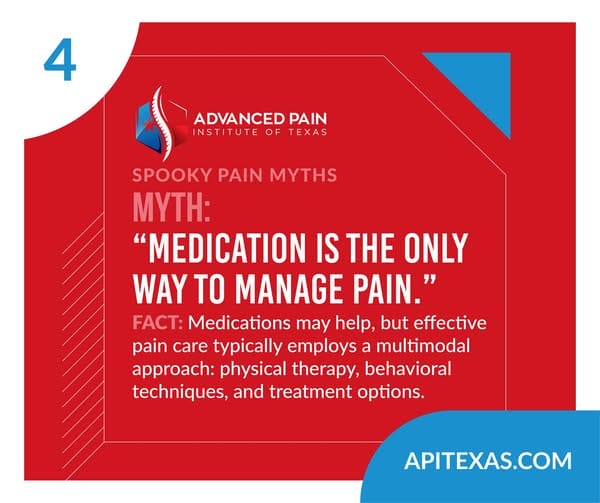
Imagine trying to fix a car engine with just a single wrench. It might help a little, but you’ll get nowhere without the full toolbox. That’s exactly what pain management is like. A multi-modal approach uses several tools and techniques together—medications, physical therapy, interventional procedures, lifestyle changes, and even mental health strategies—to tackle pain from every angle.
Why does this work better? Because pain isn’t just physical. It’s influenced by your activity level, emotional state, stress, sleep quality, and even diet. So, treating it with just one method—like medication—misses the bigger picture.
Multi-modal care focuses on:
-
Identifying the root cause of the pain
-
Reducing inflammation or nerve irritation
-
Restoring function and movement
-
Improving emotional resilience
-
Preventing the pain from coming back
This method empowers patients to play an active role in their recovery. Instead of passively taking a pill, they’re participating in therapies that promote healing. Over time, many patients find they can reduce or even eliminate their reliance on medications entirely.
At Advanced Pain Institute of Texas, we customize each pain plan using a mix of evidence-based techniques. Maybe it’s pairing nerve blocks with physical therapy, or combining lifestyle coaching with spinal cord stimulation. The goal is the same: lasting relief without unnecessary medications.
Physical Therapy: Reclaiming Mobility and Function
Physical therapy (PT) is one of the most underrated weapons in the battle against pain. It’s not just for people recovering from surgery or athletes with sports injuries—it’s for anyone whose pain limits their movement, flexibility, or strength.
Here’s how it works. A physical therapist evaluates your range of motion, posture, gait, and muscle imbalances. They then create a personalized routine of stretches, strengthening exercises, and movement strategies to correct those issues and reduce pain. Over time, as your muscles and joints become more aligned and stronger, the pain often lessens or disappears altogether.
Think of physical therapy as training your body to move smarter, not harder. Poor movement patterns and postural habits often contribute to chronic pain. With PT, you learn to retrain your body and support proper function—something pills can never do.
But it’s not all work and sweat. PT can include treatments like:
-
Manual therapy (hands-on manipulation)
-
Ultrasound therapy
-
Electrical stimulation
-
Dry needling
Each session builds on the last, slowly improving your physical health and giving you tools you can use every day. The best part? There are no side effects—unless you count feeling stronger, more flexible, and more in control of your life.
For patients at Advanced Pain Institute of Texas, PT is often a foundational part of treatment. We collaborate closely with licensed therapists to ensure exercises match the patient’s diagnosis and pain level. It’s about rebuilding from the inside out—without relying on medications to mask the progress.
Interventional Procedures: Targeting Pain at the Source
When physical therapy and medications alone aren’t enough, interventional procedures step in as precise, minimally invasive options. These aren’t your typical surgeries—they’re targeted treatments designed to go straight to the source of your pain and shut it down, often without any major downtime.
Let’s break it down. Interventional pain procedures include things like:
-
Epidural steroid injections – reduce inflammation around nerve roots
-
Nerve blocks – temporarily “turn off” pain signals from specific nerves
-
Facet joint injections – relieve pain in spinal joints caused by arthritis or injury
-
Radiofrequency ablation (RFA) – uses heat to disable specific nerves responsible for transmitting pain
-
Trigger point injections – relax tight knots of muscle that cause referred pain
What makes these procedures so powerful is their ability to provide fast and lasting relief—often with results that last months or longer. Unlike medications, which affect the whole body, these treatments work locally, only where needed. That means fewer side effects and a more focused approach.
Many patients who once depended on daily medications find they can reduce or eliminate them after a series of successful injections or nerve treatments. At Advanced Pain Institute of Texas, we use advanced imaging like fluoroscopy or ultrasound to guide these procedures with pinpoint accuracy—ensuring maximum relief with minimal risk.
Plus, these procedures can act as a “pain reset.” They break the cycle of chronic discomfort, allowing patients to move more, engage in physical therapy more effectively, and participate in everyday life again without being trapped by pain.
Lifestyle Modifications That Work
Here’s a truth bomb: your lifestyle plays a massive role in how you experience pain. From what you eat to how much you move (or don’t), your daily habits can either fight pain—or feed it. The good news? Small changes in your routine can lead to big improvements in how you feel.
Let’s start with nutrition. A diet high in sugar, processed foods, and unhealthy fats can trigger inflammation, which worsens many pain conditions like arthritis, fibromyalgia, and back pain. On the flip side, anti-inflammatory foods—like leafy greens, berries, salmon, nuts, and olive oil—can help calm the body’s pain response.
Then there’s exercise. When you’re in pain, moving might be the last thing you want to do. But gentle, consistent activity actually helps reduce pain over time. It strengthens muscles, lubricates joints, boosts circulation, and even triggers endorphin release—your body’s natural painkillers.
Sleep is another huge player. Poor sleep can amplify pain sensitivity, lower your pain threshold, and slow down healing. Improving sleep hygiene—by keeping a consistent bedtime, avoiding screens before bed, and creating a restful environment—can have a noticeable impact on your pain levels.
And let’s not forget stress. Chronic stress floods your body with cortisol, which can increase inflammation and muscle tension. Practices like yoga, deep breathing, journaling, or just taking time to disconnect can lower stress and, in turn, lower pain.
At Advanced Pain Institute of Texas, we often incorporate lifestyle coaching into treatment plans. Because here’s the deal: your body has an incredible capacity to heal when given the right support. By making intentional changes to how you live, you can reduce your pain naturally—and build resilience against future flare-ups.
Mind-Body Connection: Harnessing Mental Tools
Ever heard someone say, “It’s all in your head”? When it comes to pain, that phrase isn’t as dismissive as it sounds. Your brain plays a central role in how you perceive pain. That’s where the power of mind-body therapies comes in—they don’t just treat the body, they help rewire how your brain responds to pain.
One of the most researched methods is Cognitive Behavioral Therapy (CBT). This approach helps patients identify and change negative thought patterns that can make pain worse. For example, catastrophizing—assuming the worst about your pain—can actually increase its intensity. CBT teaches you to challenge those thoughts and replace them with more productive ones.
Another powerful tool is mindfulness meditation. Studies show that regular mindfulness practice can reduce chronic pain by helping the brain process it differently. Rather than resisting the pain, you learn to observe it without judgment. That shift alone can decrease pain intensity and improve coping.
Let’s not forget biofeedback, a technique that teaches you to control physiological responses like heart rate and muscle tension. With practice, you can actually learn to dial down your body’s pain response in real time.
Other mind-body techniques include:
-
Guided imagery – visualizing healing processes
-
Breathwork – calming the nervous system
-
Progressive muscle relaxation – releasing physical tension tied to emotional stress
At Advanced Pain Institute of Texas, we often recommend these approaches alongside physical and procedural treatments. Pain isn’t just in your nerves or muscles—it lives in your thoughts, habits, and emotions too. And when you treat the mind and body together, that’s when true healing happens.
Chiropractic and Alternative Therapies
If you’ve ever cracked your knuckles or stretched your back and felt instant relief, you already understand the principle behind chiropractic care. It’s all about aligning the spine and nervous system to reduce pressure and restore natural movement. For people suffering from chronic pain—especially in the back, neck, and joints—chiropractic treatments can be a game-changer.
But here’s the kicker: chiropractic care isn’t about “popping bones” just for the fun of it. It’s a targeted, evidence-based practice that aims to improve spinal function, reduce inflammation, and promote natural healing. Techniques vary, but the goal remains the same—get your body functioning the way it was meant to.
And it doesn’t stop there. Other alternative therapies can be incredibly helpful when combined with a broader pain management plan. Here are a few worth mentioning:
-
Acupuncture – A centuries-old practice where thin needles are inserted at specific points in the body to stimulate nerves and relieve pain.
-
Massage therapy – Helps reduce muscle tension, improve circulation, and trigger relaxation responses that dull pain.
-
Cupping therapy – Creates suction on the skin to increase blood flow and promote healing.
-
Aromatherapy and essential oils – While not a cure-all, they can complement pain relief by enhancing mood and reducing stress.
Here’s the important distinction: these therapies are complementary, not replacements for medical care. They work best when part of a comprehensive plan tailored to your specific condition.
At Advanced Pain Institute of Texas, we recognize that healing isn’t one-size-fits-all. Many of our patients benefit greatly from integrating chiropractic care or alternative therapies alongside physical therapy, interventional procedures, and lifestyle changes. The result? More relief, fewer medications, and better quality of life.
Cutting-Edge Technologies in Pain Management
We’re living in the golden age of medical technology, and pain care is no exception. For those who haven’t found relief through traditional methods, cutting-edge technologies offer hope—and often, life-changing results.
Let’s start with radiofrequency ablation (RFA). This technique uses heat to “turn off” nerves that are sending pain signals. It’s often used for chronic back and neck pain, arthritis, and joint pain. The relief can last for six months to a year—or even longer.
Another revolutionary treatment is the spinal cord stimulator (SCS). This device is implanted near the spine and delivers tiny electrical impulses that disrupt pain signals before they reach the brain. Think of it as a noise-canceling system for your nervous system. For people with severe nerve pain or failed back surgery syndrome, SCS can dramatically reduce discomfort and dependence on pain meds.
Then there’s regenerative medicine, like:
-
Platelet-Rich Plasma (PRP) injections – Use your body’s own healing platelets to repair damaged tissue
-
Stem cell therapy – Promotes regeneration in joints, discs, and muscles
These treatments aim to heal the source of the pain rather than just covering it up. They’re especially promising for conditions like tendon injuries, arthritis, and degenerative disc disease.
At Advanced Pain Institute of Texas, we stay ahead of the curve by offering these innovations to patients who qualify. Not every patient will need these high-tech treatments, but for the right candidates, they can mean the difference between a life of constant pain and one of restored freedom.
Personalized Pain Management Plans: No Two Patients Are Alike
Here’s something the “just take this pill” approach completely misses: every person experiences pain differently. Your lifestyle, age, health history, emotional wellbeing, and even genetics all play a role in how you feel pain—and how you recover from it.
That’s why cookie-cutter treatment plans don’t work. What helps one person might do nothing for someone else. And in some cases, the wrong approach can actually make things worse.
At Advanced Pain Institute of Texas, personalization is at the heart of everything we do. From the moment you walk through our doors, we start building a full picture of your pain—how it started, how it affects your life, what you’ve tried before, and what your goals are.
We then use that information to design a treatment plan that fits you. That might include:
-
A short course of medication
-
Physical therapy tailored to your limitations
-
Injections or nerve blocks
-
Nutritional and lifestyle coaching
-
Mental health support
-
Cutting-edge tech like PRP or spinal cord stimulation
And we don’t stop there. As you progress, we adapt the plan based on what’s working (and what’s not). It’s a dynamic, ongoing process—not a one-and-done visit.
Personalized care is the future of pain management. It respects your unique journey and puts you back in control. You’re not a number. You’re a person with real goals—and we’re here to help you reach them without getting stuck in the prescription cycle.
Advanced Pain Institute of Texas: A Leader in Comprehensive Pain Care
Let’s talk about where all of this comes together. Advanced Pain Institute of Texas isn’t just another clinic—it’s a hub for comprehensive, evidence-based, and truly patient-focused care. We don’t chase trends or rely on outdated models of pain management. We believe in combining the best of medicine, therapy, technology, and human understanding to create long-term solutions.
Our approach is different because:
-
We listen first, treat second
-
We treat the whole person, not just the symptoms
-
We constantly integrate new research and technology
-
We prioritize non-opioid, non-invasive solutions whenever possible
Our team includes board-certified pain specialists, nurse practitioners, therapists, and health coaches—all working together to design and execute your care plan. We collaborate across disciplines so nothing slips through the cracks.
And perhaps most importantly, we empower patients with education. When you understand what’s causing your pain and what your options are, you’re no longer at the mercy of it. You’re part of the solution.
At Advanced Pain Institute of Texas, we’re proving every day that lasting pain relief doesn’t have to come in a bottle. There are smarter, safer, and more effective ways to reclaim your life.
Breaking the Myth for Good
So let’s finally lay this spooky myth to rest: Prescription medicine is NOT your only option for pain relief. It might play a role in your recovery, especially in the short term, but it’s far from the full story. In fact, relying solely on medication can keep you stuck in a cycle of symptoms, side effects, and frustration—without ever addressing what’s really going on.
Modern pain care is smarter, more comprehensive, and more personalized than ever before. By combining therapies like physical rehab, interventional procedures, mental health support, advanced technologies, and lifestyle adjustments, you can build a foundation for long-lasting relief—without depending on a daily pill.
At Advanced Pain Institute of Texas, this is the heart of what we do. We empower patients with the knowledge, resources, and individualized care plans they need to take back control of their lives. No gimmicks. No shortcuts. Just science-backed strategies that work.
It’s time to stop fearing the pain, stop fearing life without meds, and start believing in your body’s ability to heal—with the right help.
Conclusion
Pain doesn’t have to define your life. And it definitely doesn’t have to be managed with prescriptions alone. Yes, medications can provide temporary relief. But if you want true, lasting healing—freedom from pain that lets you move, live, and enjoy your life again—you need more than a bottle of pills.
That’s where a comprehensive approach makes all the difference. Through personalized care, interventional treatments, physical therapy, lifestyle changes, and mental health strategies, it’s absolutely possible to manage pain effectively without depending on long-term prescriptions.
If you’ve been told that pain medication is your only hope, it’s time to challenge that belief. Better options are out there. And at Advanced Pain Institute of Texas, we’re ready to help you find them.
FAQs
1. Can I really manage chronic pain without prescription drugs?
Yes, many people successfully manage chronic pain using non-drug methods such as physical therapy, nerve blocks, spinal cord stimulation, and lifestyle changes. The key is creating a personalized treatment plan tailored to the source and type of your pain.
2. Are alternative therapies like acupuncture and chiropractic care scientifically proven?
Yes, many alternative therapies have scientific support for pain relief—especially when used alongside conventional treatments. For example, acupuncture and chiropractic care have shown positive results for conditions like back pain, tension headaches, and joint issues.
3. How do I know if I’m a candidate for procedures like PRP or spinal cord stimulation?
These advanced treatments are typically recommended for patients who haven’t found relief through standard care. A comprehensive evaluation by a pain specialist will determine if these options are appropriate for you.
4. Is it safe to stop taking pain medication if I switch to a non-medication plan?
It can be safe—but should always be done under medical supervision. Gradual tapering is often necessary, and your care team will help manage withdrawal symptoms or discomfort during the transition.
5. What makes Advanced Pain Institute of Texas different from other pain clinics?
We take a truly personalized, evidence-based approach to pain management. Our team offers a full spectrum of care—from conservative to advanced—while prioritizing non-opioid strategies. You’re not just a number here—you’re a partner in your own recovery.
Share this article
Related Posts






Follow us
A quick overview of the topics covered in this article.